 English
 русский
Content
Why Standard Bulbs Fail in Industrial Settings
A warehouse running three shifts a day puts lighting through a kind of stress that a typical household bulb simply cannot handle. Frequent switching, temperature swings, vibration from machinery, and the constant demand for high-output illumination all shorten bulb life dramatically. Standard LED bulbs are designed for home ceilings — not factory floors, mine shafts, or workshop environments where a single burned-out fixture can create a safety hazard.
This is where industrial high lumen filament lamps built for demanding environments make a measurable difference. They are engineered from the ground up for output, endurance, and reliability — not aesthetics.
What Makes a Lamp "Industrial Grade"
The term gets used loosely, so it helps to understand the specific engineering decisions that separate a true industrial filament lamp from an oversized household bulb. Three factors matter most: power range, thermal tolerance, and base compatibility.
Power output is the first filter. Industrial environments typically require lamps in the 18W–50W range at a minimum, producing lumen levels that cover large vertical spaces without creating dark zones. A 50W high-lumen filament lamp can replace legacy incandescent equivalents drawing two to three times the wattage — a meaningful reduction in energy costs at scale.
Thermal tolerance is equally critical. Industrial fixtures trap more heat than open domestic fittings. Lamps that cannot handle sustained high temperatures will degrade quickly, leading to flickering, color shift, and early failure. Glass shell construction — as used in both the ED90 and R7S product lines — offers superior heat dissipation and light transmittance compared to plastic alternatives.
Finally, base compatibility determines whether a lamp physically fits the existing infrastructure. Choosing the wrong base means rewiring, which adds cost and downtime.
Two Lamp Types, Two Distinct Applications
Most industrial lighting projects fall into one of two scenarios: replacing overhead fixtures in large open spaces, or upgrading specialized lamps in task-specific or architectural fittings. The product type should follow the application.
ED90 Pear-Shape High Lumen Filament Lamp
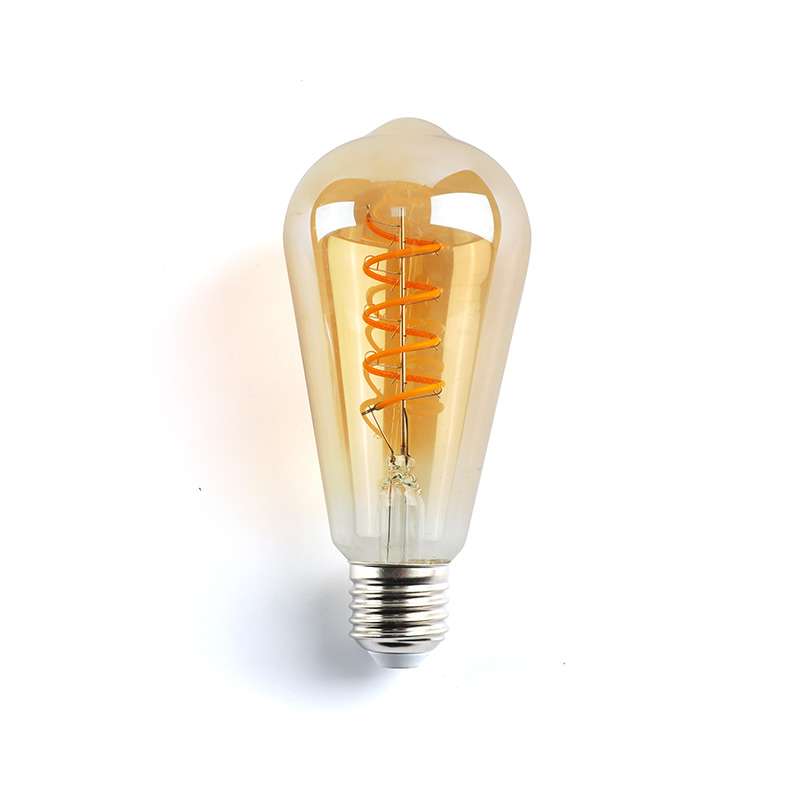
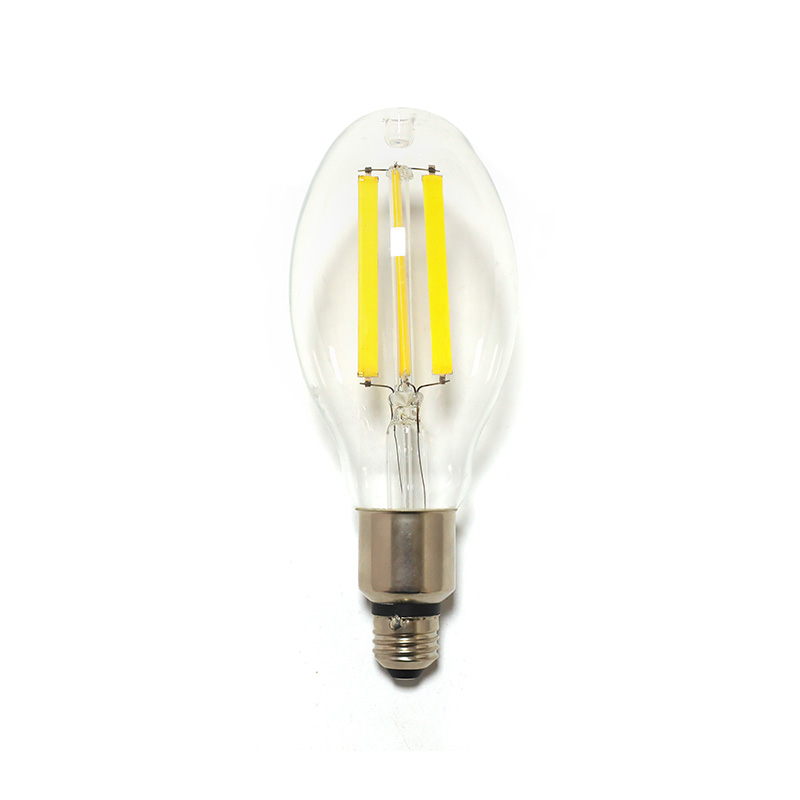
The ED90 uses a pear-shaped glass shell that is deliberately sized for industrial and mining fixture housings. The rounded form distributes light broadly, making it effective for high-bay applications in workshops, factories, and similar environments. It accepts a standard screw base and runs across a wide voltage range of 120V to 240V, which means the same lamp works in North American and European facilities without modification. Available in 18W, 24W, and 50W configurations, the ED90 scales to match the brightness requirement of the space rather than forcing a compromise.
R7S Double-Ended Tube High Lumen Filament Lamp
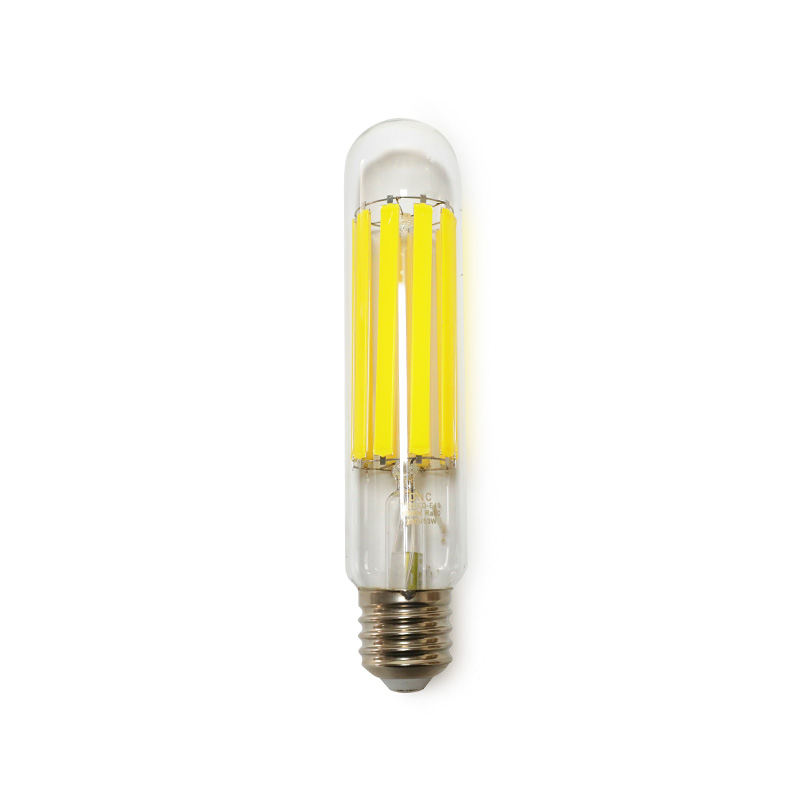
The R7S double-ended tube lamp for workshops and specialty fixtures solves a different problem. R7S holders are common in floodlights, wall washers, and industrial task lamps where a linear light source is preferred. The double-ended design pins into the holder from both ends, keeping the lamp securely seated even under vibration. Like the ED90, it uses a glass shell, operates from 18W to 50W, and handles 120V–240V input. Its ability to withstand frequent switching cycles and sustained high temperatures makes it particularly well-suited to environments where lights cycle on and off throughout a shift.
| Specification | ED90 Pear Shape | R7S Double-Ended Tube |
|---|---|---|
| Base Type | Standard screw (E27/E40) | R7S double-pin |
| Power Options | 18W / 24W / 50W | 18W / 24W / 50W |
| Voltage Range | 120V – 240V | 120V – 240V |
| Shell Material | Glass | Glass |
| Primary Use | High-bay, mining, workshops | Floodlights, task lamps, specialty fittings |
| Certifications | CE / RoHS | CE / RoHS |
How to Choose the Right Power Level
Picking between 18W, 24W, and 50W is not guesswork — it follows directly from mounting height and the area that needs to be covered. A 50W lamp at a 6-meter mounting height produces very different floor-level illuminance than the same lamp at 3 meters. As a practical starting point:
- 18W works for lower-ceiling environments (3–4 meters) or supplementary task lighting alongside a primary source.
- 24W suits mid-height installations (4–6 meters) in workshops with moderate ambient light requirements.
- 50W is the correct choice for high-bay applications above 6 meters, or any space requiring consistent, shadow-free illumination across a large floor area.
If replacing existing fixtures, the wattage equivalence should also factor in: a 50W filament lamp at high efficiency replaces incandescent sources drawing 100W–150W, which is a direct operating cost reduction of 50–60% on that circuit alone.
Durability Factors Worth Checking Before You Buy
Not all industrial lamps marketed as "high lumen" hold up equally over time. Three durability indicators are worth verifying before committing to a large order.
CE and RoHS certification confirms the product meets European safety and hazardous substance standards — the baseline for any lamp destined for professional or commercial use. Lamps without these marks carry regulatory and liability risk.
Glass shell construction is preferable to polycarbonate in high-heat environments. Glass maintains light transmittance over thousands of hours, while plastic can yellow and reduce output over time.
Voltage flexibility (120V–240V) matters for facilities that operate across multiple regions or countries, and also provides headroom in installations where grid voltage fluctuates. Lamps designed for a narrow voltage window can fail early when fed inconsistent power.
The Replacement Decision: Retrofit vs. Rewire
The most cost-effective industrial lighting upgrades work within the existing fixture infrastructure. The ED90 and R7S lamps are specifically designed for this: they drop into standard industrial holders without rewiring, which keeps changeover fast and labor costs low.
For facilities running multiple fixture types — some screw-base overhead fittings, some R7S task lights — the two-lamp strategy covers both without requiring a full fixture replacement program. That matters particularly in large facilities where the scale of a full retrofit would otherwise make the economics unfavorable.
LED filament lamps typically last 10 to 25 times longer than incandescent equivalents. Even at a conservative estimate, that translates directly into fewer maintenance call-outs, reduced stock of replacement lamps, and less disruption to operations — all of which add up well beyond the upfront unit cost.