 English
 русский
Content
Why Industrial Spaces Demand More Than Standard Bulbs
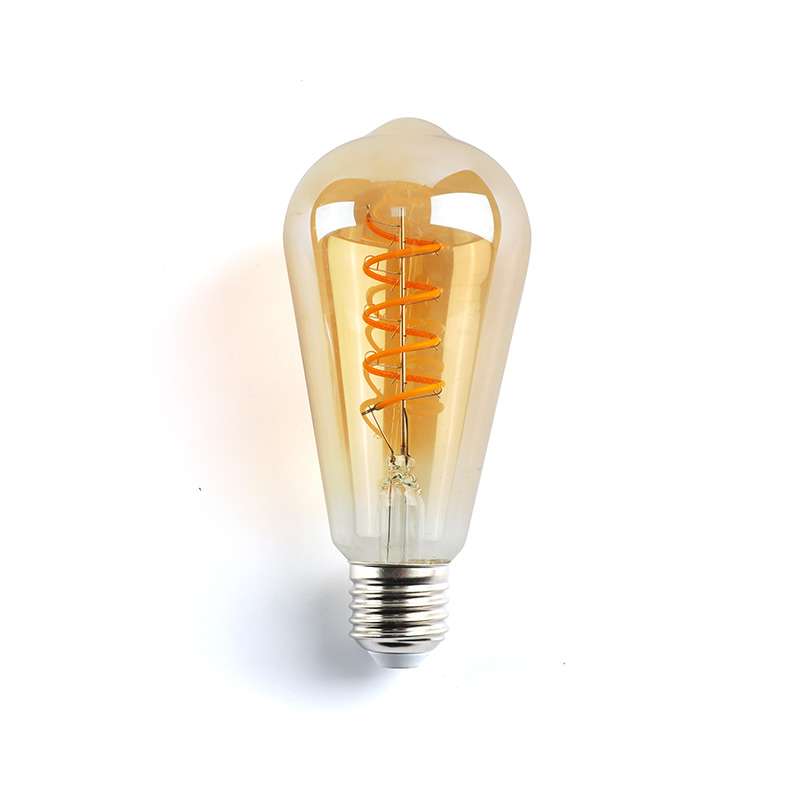
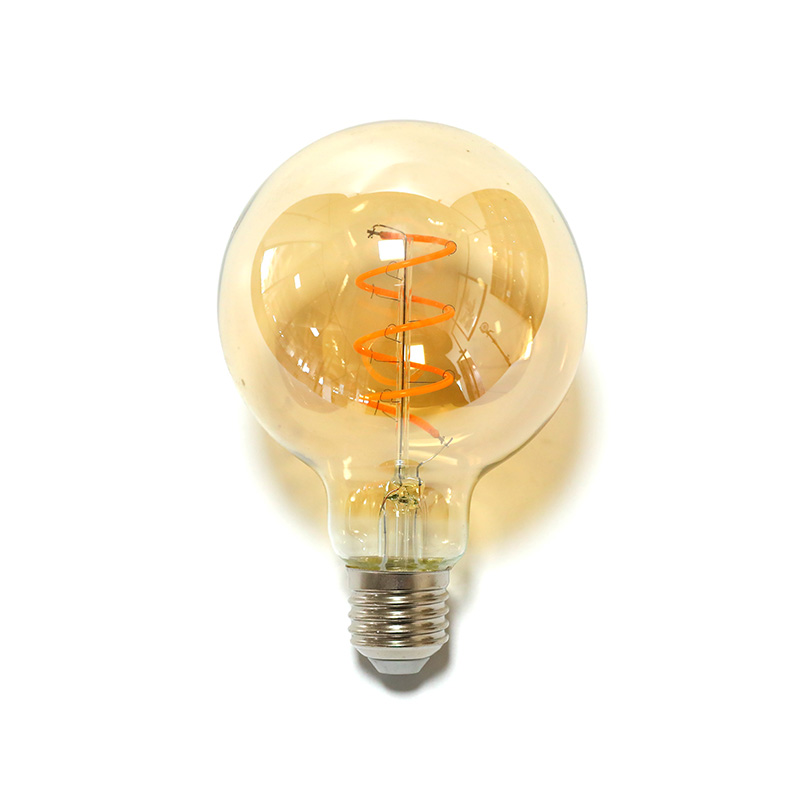
A warehouse floor running three shifts a day puts lighting under a kind of stress that a typical household bulb was never built for. Constant vibration from forklifts, temperatures that swing from freezing dock doors to sweltering production lines, humidity from processing areas — these conditions eat ordinary lamps alive. industrial high lumen filament lamps built for demanding environments solve this by combining robust construction with the output levels that large, high-ceiling spaces actually require. The difference isn't subtle: standard LED bulbs top out around 800–1,600 lumens; industrial-grade filament lamps routinely deliver 5,000 to 16,500 lumens from a single source.
This matters because under-lit workspaces don't just slow production — they create safety risks. OSHA guidelines for manufacturing areas typically require a minimum of 30 foot-candles at task level, and a single weak bulb hanging 20 feet overhead simply won't get there. Industrial high lumen filament lamps are engineered to flood large vertical spaces with consistent, glare-controlled light from mounting heights that standard lamps can't reach.
What the Numbers Actually Mean: Lumens, Wattage & CCT
Shopping by wattage alone is a habit left over from the incandescent era. The three numbers that actually matter for industrial lamp selection are lumens, efficacy (lumens per watt), and color temperature (CCT).
- Lumens measure total light output. For high-bay applications (ceiling heights of 20–45 ft), you typically need 10,000–20,000 lumens per fixture. Low-bay spaces (12–20 ft) can work with 5,000–10,000 lumens.
- Efficacy (lm/W) determines running cost. Quality industrial LED filament lamps achieve 120–180 lm/W. At 150 lm/W, a 60W lamp produces the same light as a 400W metal halide — that gap is where the energy savings come from.
- Color Temperature affects how work gets done. 4000K–5000K (cool white to daylight) is standard for factories and warehouses because it improves contrast, reduces eye strain during detail work, and keeps workers alert. Warmer tones (2700K–3000K) suit accent or break-room lighting, not production floors.
One additional spec worth checking: the Color Rendering Index (CRI). A CRI of 80+ is the minimum for industrial use; 90+ is recommended anywhere color accuracy matters, such as quality control stations or paint booths.
Choosing Between ED90 and R7S: A Practical Guide
Two lamp types dominate industrial high lumen applications, and they serve different fixture families. Understanding which one fits your setup before ordering saves time and rewiring headaches.
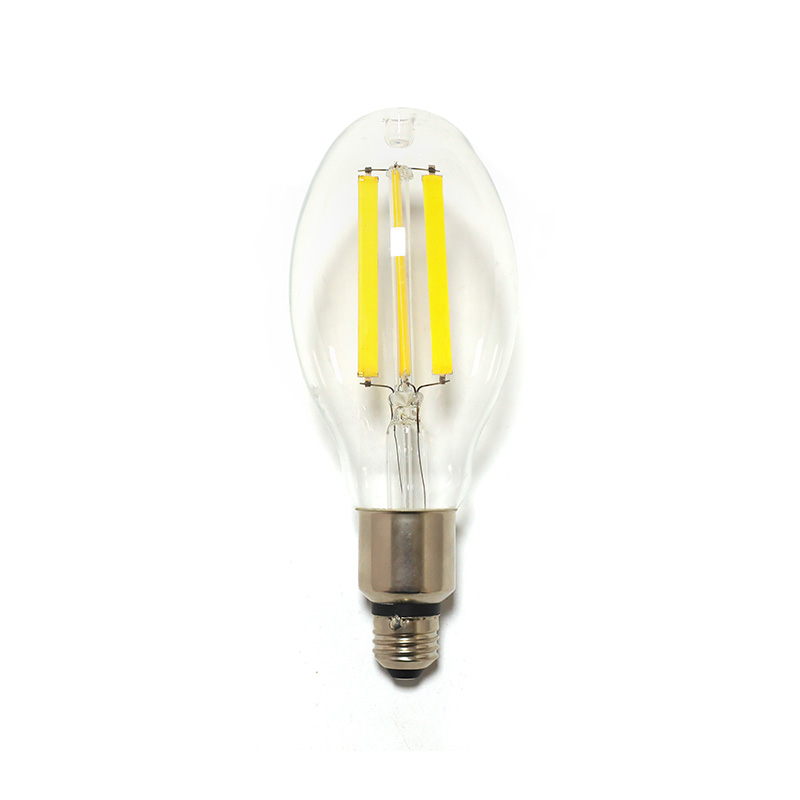
The ED90 pear-shape high lumen filament lamps are designed for omnidirectional output — light radiates 360° from the source, making them ideal for open high-bay pendants, post-top fixtures, and any application where you need broad, even coverage across a wide floor area. The classic HID-style shape also means direct retrofit into existing metal halide sockets without modifying the fixture housing.
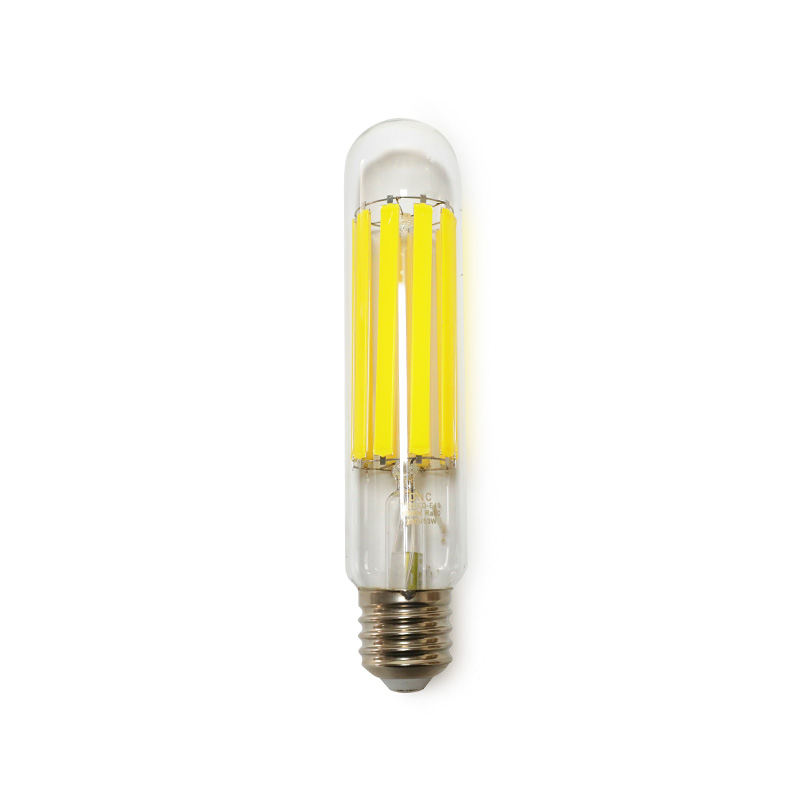
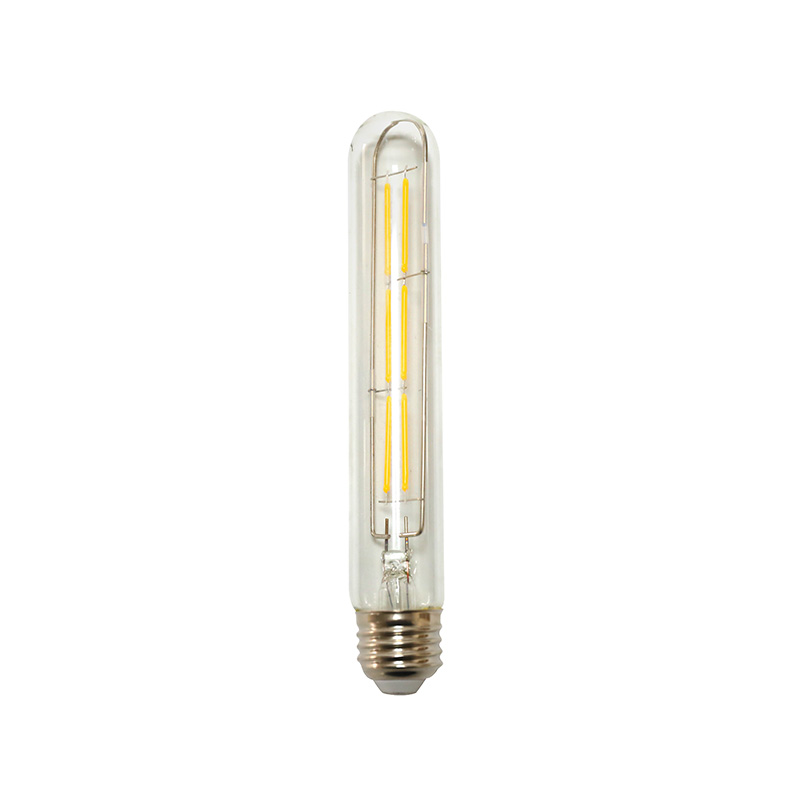
The R7S double-ended tube high lumen filament lamps take a different approach. The linear tube format fits linear flood fixtures, wall packs, and construction site work lights — anywhere you need a directional, elongated beam rather than a sphere of light. R7S lamps also handle enclosed fixtures well, and their compact profile makes them easier to shield or direct with reflectors.
| Feature | ED90 Pear Shape | R7S Double-Ended Tube |
|---|---|---|
| Beam pattern | 360° omnidirectional | Linear / directional |
| Best for | High-bay pendants, post-tops | Wall packs, flood fixtures |
| Retrofit fit | HID/metal halide sockets | R7S halogen linear fixtures |
| Enclosure rating | Open or enclosed | Typically enclosed-rated |
Installation Tips for Ballast-Bypass Retrofit
The majority of industrial high lumen LED filament lamps are designed as Type B ballast-bypass — meaning the internal driver runs directly off line voltage (typically 120–277V), eliminating the existing ballast entirely. This is a significant advantage: ballasts are the most common failure point in legacy HID systems, and bypassing them removes a recurring maintenance headache.
A few practical points before you begin:
- Verify socket compatibility. ED90 lamps typically use E39 (mogul) or E26 (medium) bases. Confirm your fixture's socket type before ordering — adapters exist but add a failure point.
- Disconnect the ballast. Ballast-bypass lamps must not be connected to a live ballast. Follow the wiring diagram included with the lamp; the process usually takes under five minutes per fixture.
- Check fixture thermal rating. LED drivers generate less heat than HID sources, but enclosed fixtures still need adequate airflow. Confirm the lamp's operating temperature range covers your environment — quality industrial lamps handle –20°C to +50°C without performance loss.
- Universal burn position. Most ED90 and R7S industrial filament lamps are rated for any burn position (base-up, base-down, horizontal). Confirm this if your fixtures mount horizontally, as some lower-cost lamps are base-down only.
The Long-Term Cost Picture
Upfront lamp cost is rarely the right number to optimize for in industrial settings. The real calculation involves three variables: energy consumption, lamp lifespan, and maintenance labor.
On energy alone, switching from 400W metal halide to a 60W LED filament lamp that delivers equivalent lumens cuts that fixture's electricity draw by 85%. Across a 200-fixture warehouse running 16 hours a day, that difference adds up to hundreds of thousands of kilowatt-hours annually. independent data from the U.S. Department of Energy confirms that industrial and commercial high-bay applications represent the largest single category of LED energy savings potential — and the numbers bear that out at site level too.
Lifespan compounds the savings further. Industrial LED filament lamps are rated for 50,000+ hours, versus 15,000–20,000 hours for metal halide. In a facility where lamp changes require boom lifts and two-person crews, that difference translates directly into labor costs avoided. Fewer replacements also mean less disposal of mercury-containing HID lamps — a compliance benefit that matters in regulated industries. For a deeper look at how these lamps cut energy costs by up to 60%, the numbers by application type are worth reviewing before building your retrofit budget.
The bottom-line logic is straightforward: in high-usage industrial environments, the payback period on a quality LED filament retrofit typically falls between 12 and 24 months. After that, every month is pure operating cost reduction.