 English
 русский
Content
- 1 Why the Right Filament Bulb Makes a Bigger Difference Than You Think
- 2 What Makes a Filament Bulb Different from Standard LED Bulbs
- 3 Common Bulb Shapes and Where They Belong in the Home
- 4 Color Temperature: Matching Light to Room Function
- 5 Base Types and Compatibility: Avoiding Costly Mistakes
- 6 Dimmability: What Buyers Need to Know Before Specifying
- 7 Energy Efficiency and Long-Term Cost: Running the Numbers
- 8 Quality Standards to Look for When Sourcing
- 9 Choosing Filament Bulbs by Room: A Practical Room-by-Room Guide
- 10 OEM and Custom Options for Buyers Sourcing at Volume
Why the Right Filament Bulb Makes a Bigger Difference Than You Think
Lighting shapes how a room feels—how warm it looks in the evening, how clearly you can work at a desk, how welcoming an entryway seems to a guest. Yet most buyers still pick bulbs by wattage alone, without considering color temperature, beam angle, or base compatibility. As a manufacturer who has been producing LED filament bulbs for both domestic and export markets, we see the consequences of mismatched choices every day: flickering dimmables, overlit bedrooms, cold-white living rooms. This guide is intended to help importers, retailers, and end buyers make more informed decisions about home filament light bulbs before placing an order.
What Makes a Filament Bulb Different from Standard LED Bulbs
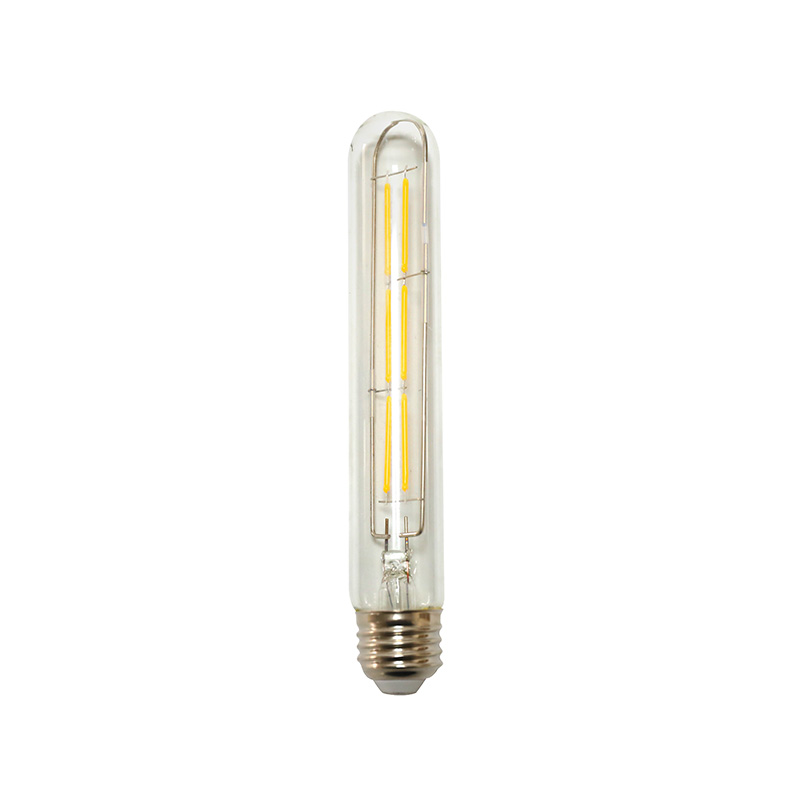
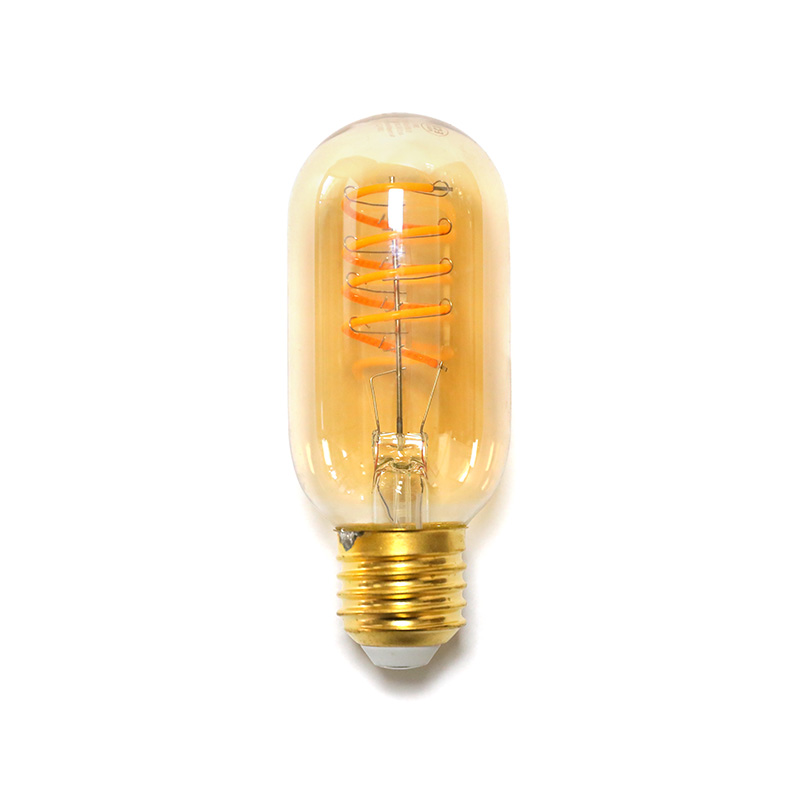
A filament-style LED bulb is built to replicate the appearance of a traditional incandescent or Edison bulb—clear glass, visible glowing filaments, omnidirectional light output—while using LED technology inside. The "filaments" are actually strips of LED chips mounted on a transparent substrate and coated in phosphor to produce warm, diffused light.
This construction matters for two reasons. First, the 360-degree light distribution makes filament bulbs far more suitable for exposed fixtures—pendant lamps, chandeliers, wall sconces—than directional LED alternatives. Second, the visual warmth of the filament aesthetic appeals strongly to residential buyers, particularly in European and North American markets where decorative lighting has grown significantly as a category.
From an efficiency standpoint, a modern LED filament bulb typically consumes 4–8W while producing the light equivalent of a 40–60W incandescent—an energy reduction of roughly 85%. Lifespan ratings commonly reach 15,000 to 25,000 hours, compared to around 1,000 hours for a standard incandescent.
Common Bulb Shapes and Where They Belong in the Home
Shape is often underestimated in the selection process, yet it directly affects how light distributes within a fixture and how the bulb looks when visible. Below is a practical breakdown of the most common shapes used in home filament bulbs:
| Shape | Typical Diameter | Best Application | Notes |
|---|---|---|---|
| A60 / A19 | 60mm | General home use, table lamps, downlights | Most widely sold residential shape globally |
| G45 | 45mm | Chandeliers, decorative pendants | Compact globe; ideal where the bulb is visible |
| C35 / FC35 | 35mm | Wall sconces, candelabras | Candle shape; FC35 has a bent tip for added flair |
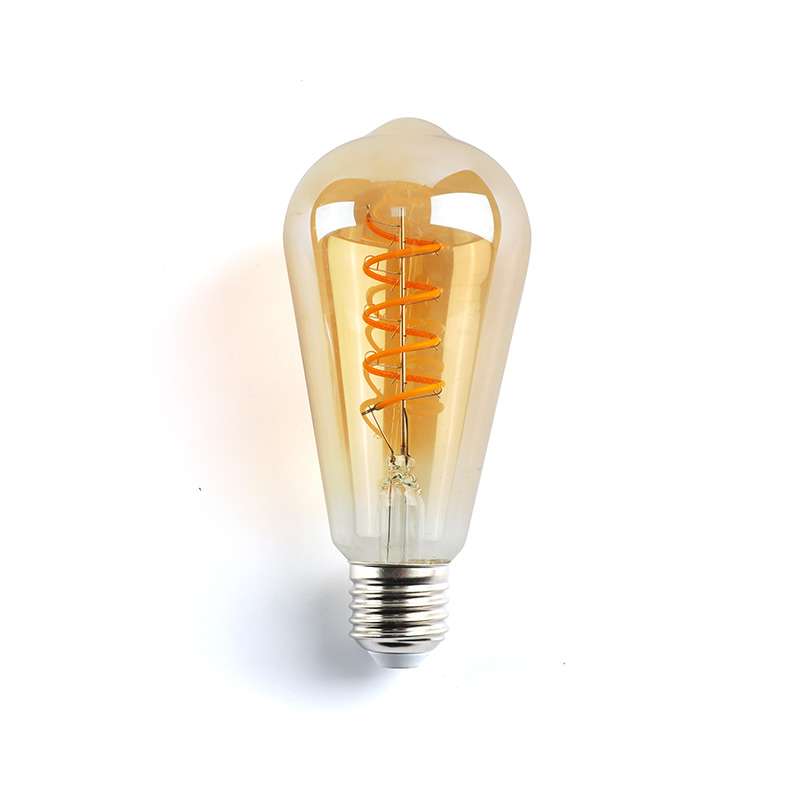
| ST64 | 64mm | Edison-style pendants, exposed fixtures | Popular for both home and hospitality use |
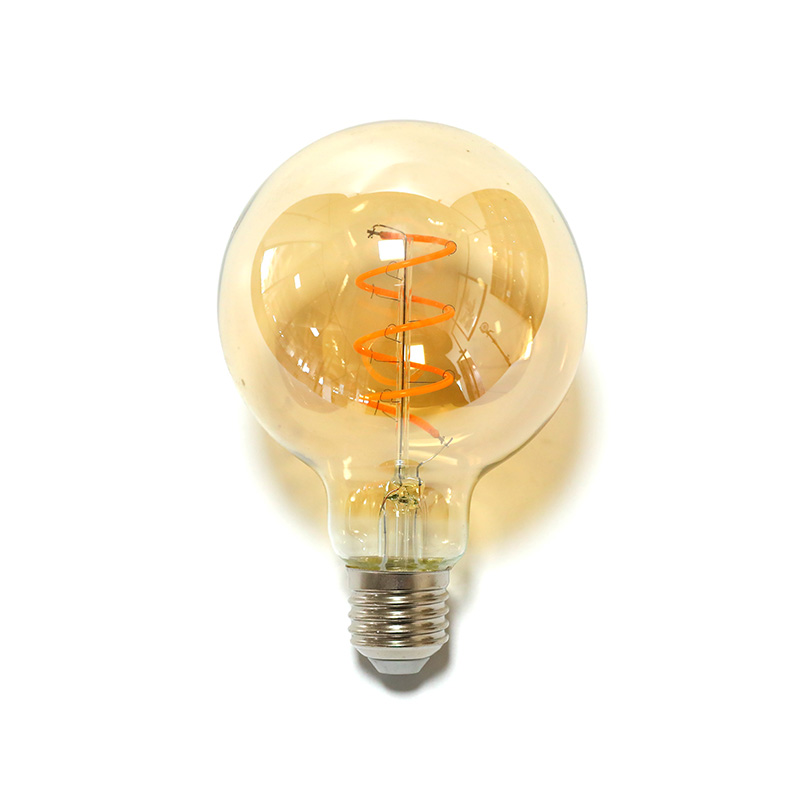
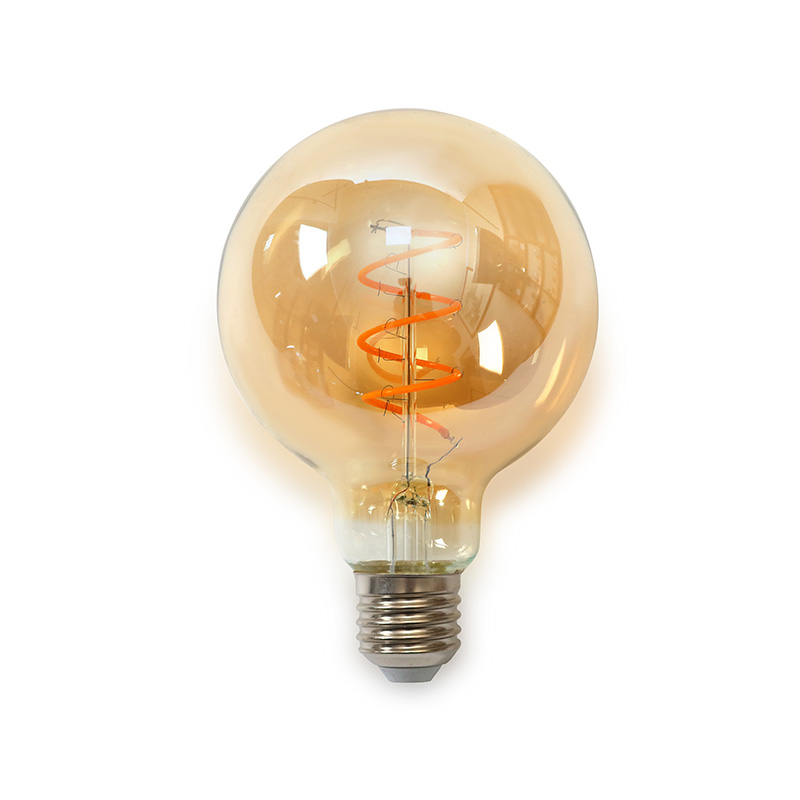
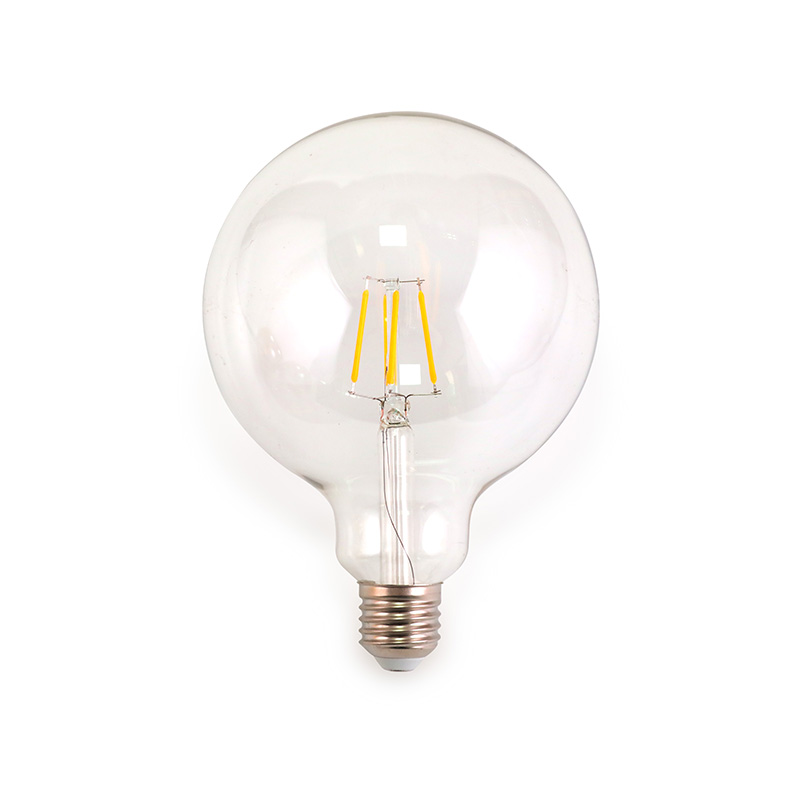
| G95 / G125 | 95–125mm | Statement pendants, decorative table lamps | Large globe; high visual impact |
For buyers sourcing across multiple product categories, our home filament light bulbs product page covers the full range of shapes and configurations we manufacture, including dimmable and non-dimmable variants.
Color Temperature: Matching Light to Room Function
Color temperature, measured in Kelvin (K), is one of the most consequential decisions in residential lighting—yet it is frequently overlooked when buyers focus only on wattage or lumen output. Getting this wrong is the single most common complaint we hear from retail customers after installation.
Warm White (2700K–3000K)
This range produces a soft, yellowish light that closely resembles traditional incandescent output. It is well-suited to living rooms, bedrooms, dining areas, and any space where relaxation or ambiance is the priority. 2700K is the most requested color temperature in residential filament bulbs, particularly in European markets where warm, intimate lighting is a cultural preference.
Natural White (3500K–4000K)
A neutral tone that avoids both the yellow cast of warm white and the harshness of cool white. This range works well in home offices, hallways, and kitchens where clarity is needed without clinical brightness. Many buyers in North America favor 3000K–3500K as a balanced default for general-purpose home use.
Cool White / Daylight (5000K–6500K)
Higher color temperatures produce a blue-white light that enhances alertness and visual clarity. These are appropriate for bathrooms, utility rooms, garages, and task-focused areas. Cool white is generally not recommended for living spaces unless the buyer specifically prefers a modern, high-contrast aesthetic.
Base Types and Compatibility: Avoiding Costly Mistakes
Base compatibility is a practical concern that generates more return requests and sourcing errors than almost any other factor. The three bases most relevant to home filament bulbs are:
- E27 – The standard medium screw base used across Europe, Asia, and most of the world. This is the default base for A60, G95, ST64, and most globe shapes.
- E26 – The North American standard, fractionally narrower than E27. In most cases, E26 and E27 bulbs are interchangeable in practice, but buyers ordering for the US market should confirm base specifications to avoid issues.
- E14 – The small Edison screw used in candelabras, chandeliers, and decorative wall fittings. Common with C35 and G45 shapes.
- B22 – The bayonet base used primarily in the UK, Australia, and parts of South Asia. Less common for filament styles but available on request.
For OEM and private-label orders, we produce bulbs with custom base configurations. Confirming the target market's electrical standard early in the sourcing process prevents expensive re-tooling or returns.
Dimmability: What Buyers Need to Know Before Specifying
Not all LED filament bulbs are dimmable, and not all dimmers work correctly with LED loads. This is a detail that causes disproportionate trouble in the field, especially for buyers supplying residential renovation projects or hospitality fit-outs.
Dimmable filament bulbs require a compatible trailing-edge (LED) dimmer. Using a leading-edge or TRIAC dimmer designed for incandescent loads will typically cause flickering, buzzing, or a limited dimming range. The minimum load rating of the dimmer must also be matched to the low wattage of LED filament bulbs—many older dimmers have a minimum load of 40W or higher, which is not compatible with a 4W or 6W LED.
When specifying dimmable bulbs for a project, we recommend requesting a compatibility list from the bulb supplier and testing with the intended dimmer before committing to large volumes. We provide dimming test data for our dimmable product lines on request.
Energy Efficiency and Long-Term Cost: Running the Numbers
The efficiency argument for LED filament bulbs is well established, but it is worth making concrete for buyers evaluating total cost of ownership—particularly those purchasing at volume for residential developments or retail distribution.
| Bulb Type | Wattage (800 lm equiv.) | Rated Lifespan | Annual Energy Cost (3hr/day @ $0.12/kWh) |
|---|---|---|---|
| Incandescent | 60W | ~1,000 hrs | ~$7.88 |
| CFL | 13–15W | ~8,000 hrs | ~$1.97 |
| LED Filament | 6–8W | 15,000–25,000 hrs | ~$1.05 |
Across a home with 20 light points, the difference between incandescent and LED filament bulbs translates to roughly $135 in annual electricity savings—before accounting for the reduced cost of replacement bulbs. For property developers or hospitality operators fitting out multiple rooms, the scale of savings is proportionally larger.
Quality Standards to Look for When Sourcing
Not all filament bulbs are manufactured to the same standard, and price differences between suppliers often reflect real differences in component quality, testing, and certification. When evaluating suppliers, buyers should ask specifically about the following:
- CE and RoHS certification – Required for all products sold in the European market. CE confirms electromagnetic compatibility and safety; RoHS confirms absence of restricted hazardous substances including lead and mercury.
- Lumen maintenance (L70) – The industry benchmark for LED lifespan ratings. L70 refers to the point at which a bulb retains at least 70% of its original lumen output. Reputable manufacturers will provide L70 data from accredited testing.
- Color Rendering Index (CRI) – A measure of how accurately a bulb renders colors compared to natural daylight. For home use, a CRI of 80 or above is the accepted minimum; CRI 90+ is recommended for spaces where color matters, such as dining rooms or living areas with artwork.
- Flicker performance – Low-quality driver circuits produce visible or invisible flicker that can cause eye strain and headaches. Responsible suppliers will provide flicker test data aligned with IEEE 1789 or similar standards.
Our products are manufactured in compliance with CE and RoHS standards, and we supply full documentation to customers sourcing for European and international markets.
Choosing Filament Bulbs by Room: A Practical Room-by-Room Guide
Rather than applying one specification across an entire property, matching the bulb to the room's function consistently produces better results for end users and fewer after-sale complaints for retailers.
Living Room
Prioritize warmth and visual comfort. A 2700K warm white filament bulb in an A60 or G95 shape works well in floor lamps and pendant fittings. If the fixture uses a dimmer, confirm dimmability before ordering. Lumen output around 400–600 lm per bulb is typically sufficient when multiple light sources are used together.
Bedroom
The bedroom is where the case for warm, low-intensity light is strongest. Research from the National Sleep Foundation indicates that exposure to bright or blue-enriched light within two hours of sleep onset suppresses melatonin production. A 2700K bulb at 300–400 lm for bedside lamps supports healthy sleep habits while maintaining adequate task lighting for reading.
Kitchen and Bathroom
These spaces benefit from higher color temperatures (3000K–4000K) and higher lumen output (800–1100 lm). Clear visibility for food preparation and personal grooming takes priority over ambiance. An A60 or G45 bulb with a neutral white output and CRI above 80 is appropriate for most residential kitchens and bathrooms.
Hallways and Staircases
Safety and energy efficiency are the primary concerns here. A C35 or G45 filament bulb at 3000K in a ceiling or wall fitting provides enough illumination without creating glare. Since these areas are often lit for extended periods, the energy efficiency advantage of LED filament becomes particularly valuable.
OEM and Custom Options for Buyers Sourcing at Volume
For importers, distributors, and property developers purchasing in quantity, off-the-shelf specifications often fall short of specific project requirements. Custom wattage, glass finish (clear, frosted, smoked, amber-tinted), filament pattern, and private-label packaging are all areas where we regularly work with buyers to deliver tailored solutions.
Our manufacturing capabilities cover a wide range of shapes and configurations—from the compact C35 used in decorative chandeliers to the A60 and ST64 shapes that form the backbone of most residential lighting ranges. We offer OEM and ODM services, and our production team can advise on minimum order quantities, lead times, and compliance documentation for target markets.
If you are evaluating suppliers or planning a sourcing project, our home filament light bulbs collection provides a starting point for understanding our product range and available specifications.