 English
 русский
Content
Christmas light string bulbs are far more than a festive afterthought. Their practical combination of weather‑resistant construction, energy‑saving LED technology, and nearly limitless design flexibility makes them a smart, year‑round lighting solution—whether you are decorating a living room, a backyard party, or a remote campsite.
Why LED Technology Dominates Modern String Lights
The shift from traditional incandescent bulbs to LED string lights is driven by measurable performance gains. A standard LED string light can consume up to 80% less energy than an incandescent set of the same length, reducing both electricity costs and the risk of overheating. An LED bulb often lasts 25,000 hours or more, while a typical incandescent Christmas bulb provides only 1,200 hours. This durability means far fewer replacements during a long holiday season or frequent outdoor use.
| Feature | Incandescent Bulbs | LED Bulbs |
|---|---|---|
| Average Lifespan | 1,200 hours | 25,000+ hours |
| Energy Use per 100 Bulbs | ~40 watts | ~6‑8 watts |
| Heat Emission | High | Very low |
| Break Resistance | Glass, fragile | Epoxy or plastic, shatter‑resistant |
The low heat output of LED bulbs adds a critical safety advantage. They stay cool to the touch even after hours of operation, allowing them to be used near fabrics, dry branches, or tent materials without creating a fire hazard.
Understanding Waterproof Ratings for Outdoor Use
Durability outside depends almost entirely on the ingress protection, or IP, rating. For camping, garden parties, or permanent outdoor displays, look for a minimum of IP65. This rating guarantees complete protection against dust and low‑pressure water jets from any direction, meaning the string can withstand heavy rain or a splash from a nearby lake. An IP44 rating is enough for covered patios but will not survive direct downpours. Here is how common ratings break down.
- IP44 – Splash‑proof, suited to covered outdoor areas.
- IP65 – Fully dust‑tight and rain‑resistant, ideal for exposed outdoor locations.
- IP67 – Can be temporarily submerged, suitable for extreme wet conditions or accidental immersion.
When selecting a string light set for camping, checking the power connector’s waterproofing is equally important. A fully IP65 string with an unprotected plug will still fail. Many practical setups use a weatherproof junction box or a cord with a built‑in rubber seal to maintain the entire circuit’s protection.
Customizing Your Light Display
The real value of Christmas light string bulbs lies in how easily they adapt to different spaces and events. Customization goes well beyond picking a color.
Length and Spacing Options
Light strings are available in standard lengths from 10 feet to over 100 feet. Bulb spacing ranges from 4 inches for a dense, curtain‑like glow to 24 inches for a delicate, spaced‑out look. A 50‑foot string with 12‑inch spacing gives you roughly 50 bulbs, which is a practical choice for wrapping tree trunks or outlining a tent canopy.
Modes and Color Combinations
Most LED strings now include a controller that cycles through 8 to 12 modes—steady on, slow fade, twinkle, sequential chase, and combination flashing. Pure white, warm white, red, green, blue, and multi‑color strings are baseline options. For a camping atmosphere that mimics lantern light, a warm white string with a gentle fading mode creates a soft, inviting circle without harsh glare.
Wire and Bulb Shape Choices
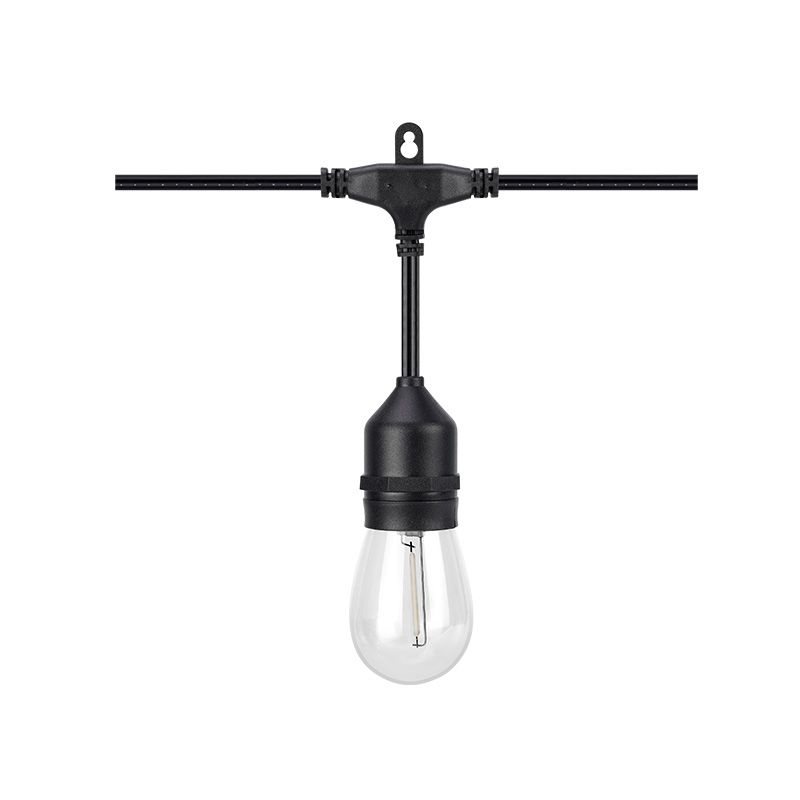
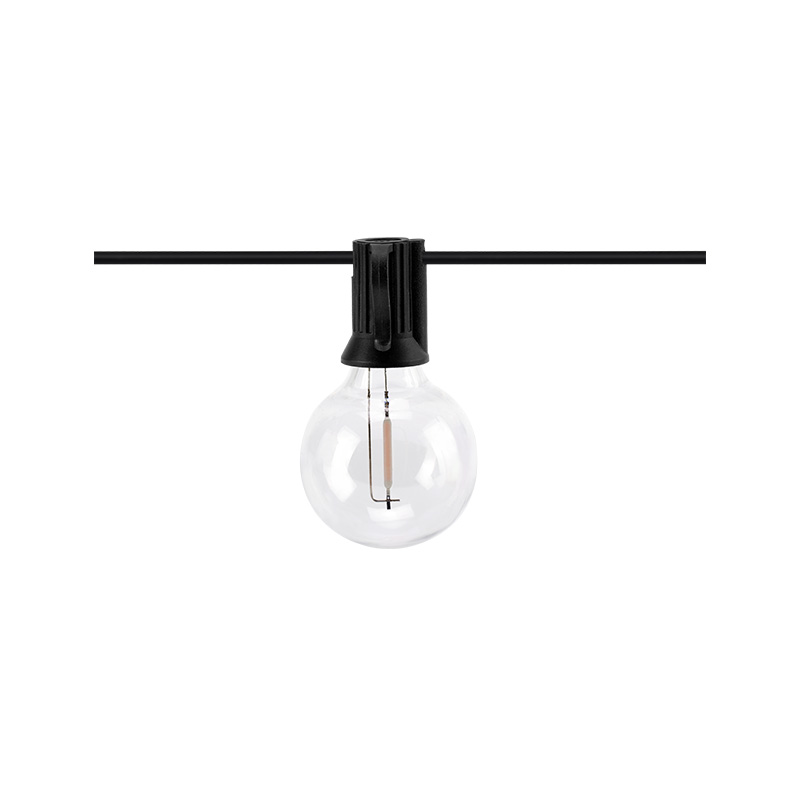
Green wire blends into foliage and is perfect for garden use; black or white wire suits modern indoor décors. Bulb shapes range from classic C7 and C9 ceramic styles to mini globes, stars, and faceted drops. Using C9 clear bulbs on a black wire produces a bistro‑style overhead canopy that transforms a backyard into a dinner venue, while mini strawberry‑shaped bulbs lend a nostalgic holiday feel to a front porch.
Energy and Cost Considerations
Running a large display does not have to mean a large utility bill. A 100‑bulb incandescent string running 6 hours a night for 30 days can add approximately 7.2 kWh to your consumption. An equivalent LED string uses under 1.5 kWh for the same period—roughly the energy draw of a single laptop charging session. At an average electricity rate of $0.15 per kWh, the incandescent set costs about $1.08, while the LED set costs just $0.23. For a multi‑string outdoor setup featuring 1,000 bulbs, the savings over a season become substantial and pay back the slightly higher upfront price of LED sets within one or two years.
Best Practices for Installation and Storage
A thoughtful installation routine protects your investment and prevents frustration.
- Test every string before hanging. A single dead bulb on a series circuit can darken an entire section, so identify and replace faulty units while the string is still on the ground.
- Use plastic clips or zip ties instead of staples or nails. Metal fasteners can cut through wire insulation and create a short circuit or rust point.
- Do not connect more than the manufacturer’s stated limit—usually 3 to 5 strings end‑to‑end for home‑grade LED sets—to avoid overloading the fuse.
- For camping, carry a compact solar‑compatible USB string set as a backup. A 10‑foot USB‑powered LED string can run for an entire evening off a small power bank.
- When packing away, wind each string around a cardboard spool or a dedicated reel. Leaving bulbs loose in a box risks tangled wires and cracked sockets. Storing strings in a sealed plastic tote with a silica gel packet keeps moisture out and extends the life of the waterproof seals.
The adaptability of Christmas light string bulbs turns them into a permanent part of your gear, not just a seasonal item. With the right rating, a well‑chosen color scheme, and careful handling, a single set can serve a living room mantle in December, a rooftop tent in July, and a patio pergola year‑round.