 English
 русский
Content
- 1 Why Round Dimmable Christmas Lights Are Worth the Extra Care
- 2 What You Need Before You Touch a Single Hook
- 3 Step 1 — Test the Lights Before They Go Up
- 4 Step 2 — Plan Your Route and Mark Hook Positions
- 5 Step 3 — Prep the Wall Surface
- 6 Step 4 — Mount the Hooks and Hang the Strand
- 7 Step 5 — Connect, Dim, and Fine-Tune
- 8 Step 6 — Removal Without the Drama
- 9 Choosing the Right Bulb for the Job
Why Round Dimmable Christmas Lights Are Worth the Extra Care
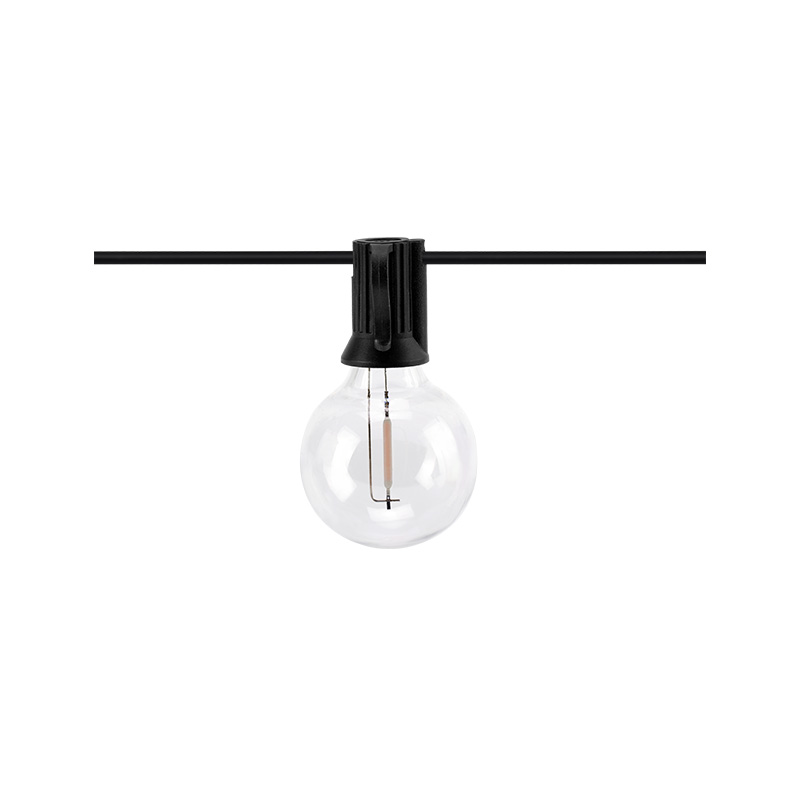
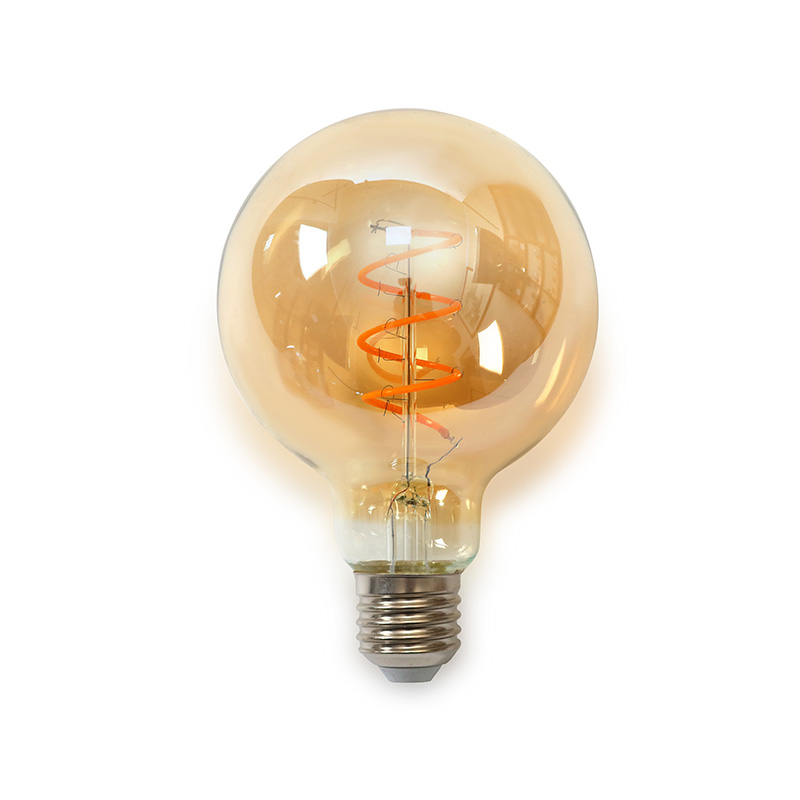
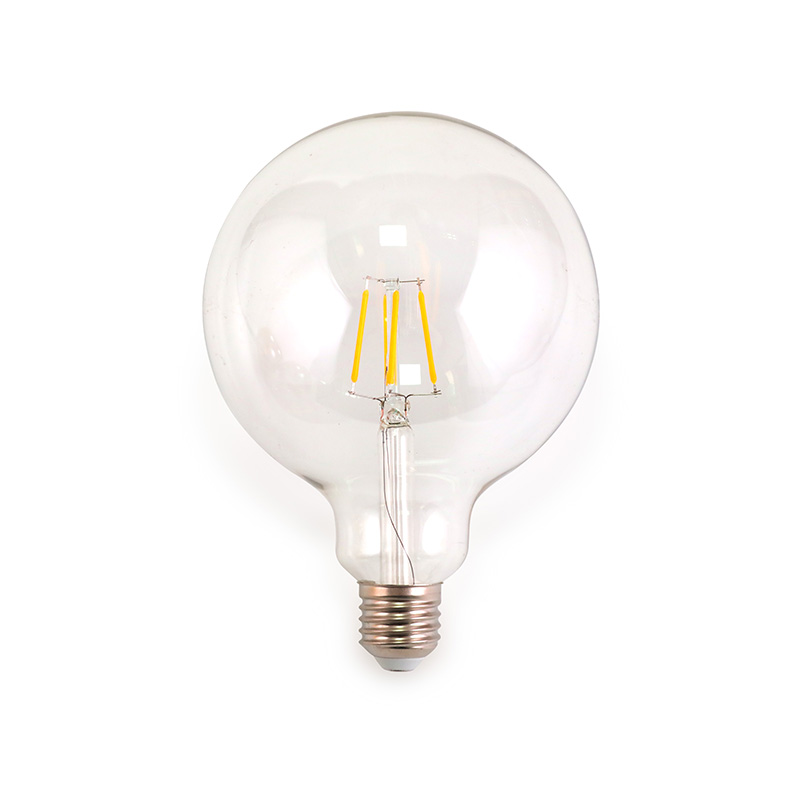
Round globe bulbs — especially the G40 format with a ~40 mm diameter — have become a go-to choice for holiday decorating because their full, even glow is far more flattering than pointed mini lights. Pair that with a dimmable circuit and you can dial the mood from "bright party" down to "quiet candlelight" without swapping a single bulb. The tradeoff is weight: glass globe strings are heavier than plastic alternatives, so wall mounting must be planned carefully to avoid holes, peeling paint, or cracked tiles.
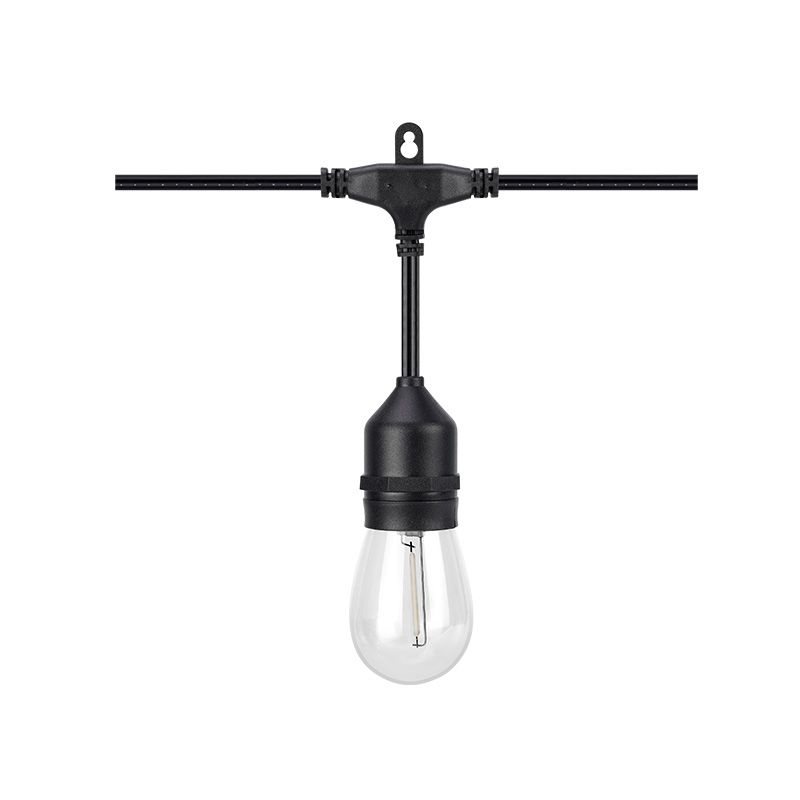
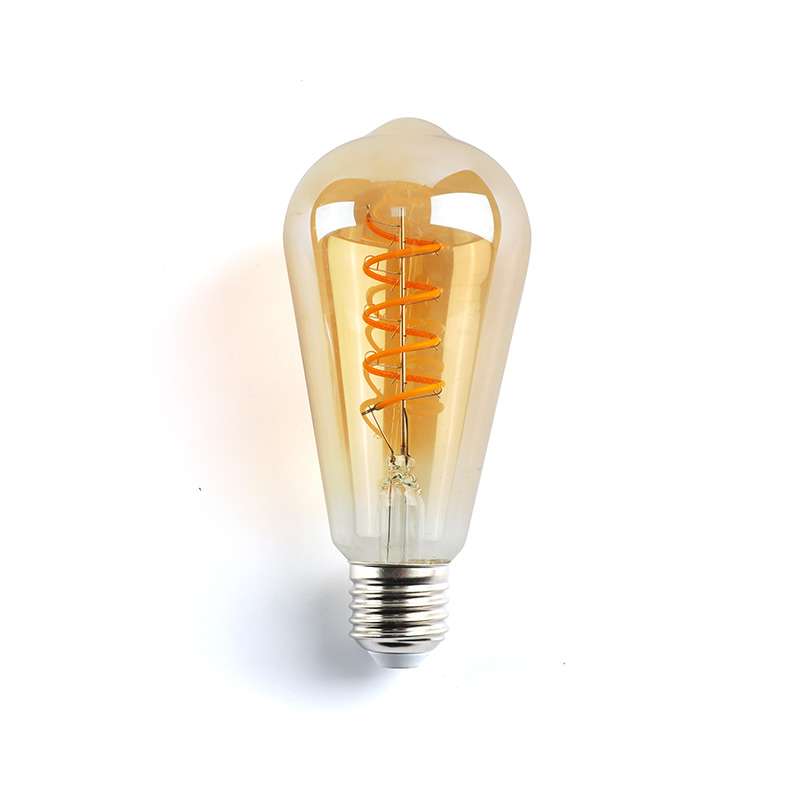
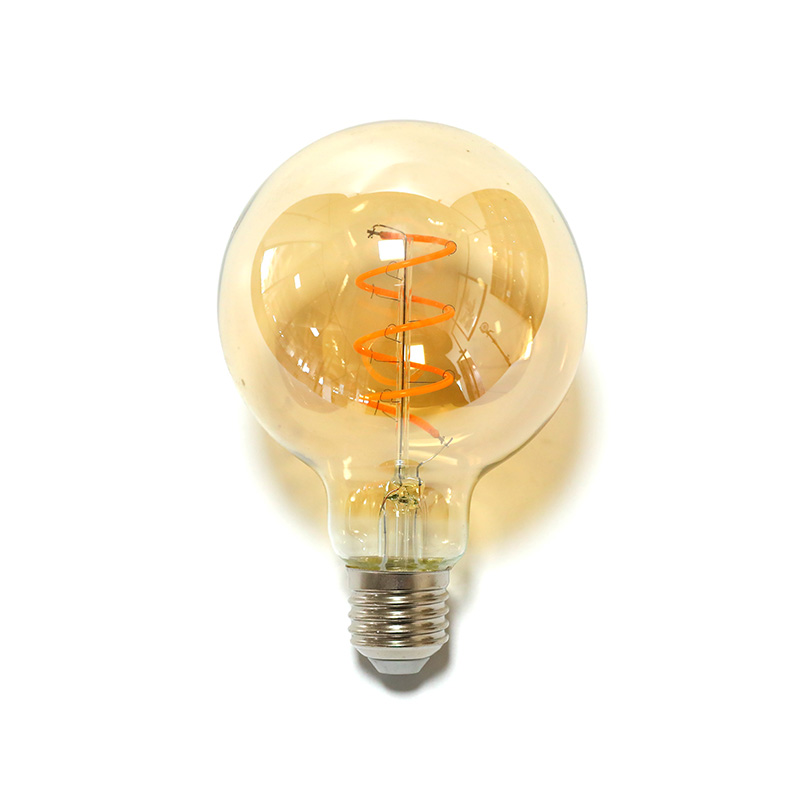
Before you start, browse our full range of Christmas light string bulbs to confirm your strand's weight, spacing, and connector type — these details directly affect which no-damage hardware you'll need.
What You Need Before You Touch a Single Hook
Gather everything in advance so you're not climbing back down a ladder halfway through the job.
- Removable adhesive hooks — rated for at least 1.5× the weight of your heaviest strand. Look for "stretch-release" backing so removal won't pull paint.
- Plastic gutter or shingle clips — for rooflines or eaves where adhesive won't bond reliably.
- Brick or masonry clips — for textured exterior walls; no drilling required.
- A soft tape measure — measure the intended run first, then add 10–15% slack so the cord hangs in a gentle arc rather than pulling taut on every hook.
- A GFCI-protected outlet — mandatory for any outdoor installation to guard against electrical shorts from moisture.
Never use staples, nails driven through the cord, or standard household tape. These damage the wire insulation and create fire or short-circuit risk regardless of the surface.
Step 1 — Test the Lights Before They Go Up
Plug the strand into an indoor outlet and run through every dimmer setting. Confirm all bulbs light up, the dimmer responds smoothly, and the plug-end fits your extension cord. Replacing a faulty bulb on the ground takes two minutes; doing it from a ladder after installation takes twenty. If you're connecting multiple strands, check the manufacturer's chain limit — LED strings typically allow far more daisy-chained connections than incandescent ones.
Step 2 — Plan Your Route and Mark Hook Positions
Sketch — even roughly — where the string will run: along a window frame, across a porch ceiling, or draped over a railing. Mark hook positions with a small piece of painter's tape before pressing any adhesive permanently. For a clean look, space hooks every 30–50 cm so the cord forms consistent, shallow curves rather than long, sagging dips. Locate the nearest power source at the start of the run so the plug-end lands close to the outlet without an extension cord crossing foot-traffic areas.
Step 3 — Prep the Wall Surface
Adhesive hooks fail on dusty or oily surfaces. Wipe each mounting point with a dry cloth, then a quick pass of isopropyl alcohol. Let the surface dry completely — at least 5 minutes — before pressing the hook backing. On freshly painted walls, wait a full 7 days after painting before applying any adhesive, as the paint is still curing and adhesive will peel it on removal.
Step 4 — Mount the Hooks and Hang the Strand
Press each hook firmly for 30 seconds and wait the manufacturer's recommended curing time (usually 1 hour for standard loads, longer for heavy strands) before loading any weight. Start hanging from the power-supply end so the plug naturally sits near the outlet. Clip or loop the cord into each hook as you move along the run — never pull the cord tight between anchor points. A little slack protects both the wire and the hooks from cumulative tension, which is the most common cause of adhesive failure.
For outdoor rooflines, universal gutter clips slide over the gutter lip without any adhesive or tools. For brick or stone walls, channel-style masonry clips grip the mortar joint — no drilling, no residue.
Step 5 — Connect, Dim, and Fine-Tune
Plug into the GFCI outlet and test the dimmable function across the full range. Walk the length of the installation and look for sagging sections, twisted sockets, or bulbs that didn't seat fully during hanging. Minor adjustments are easy to make now before any heat-cycling sets in. If you're using a smart plug or timer, set your on/off schedule at this stage — a consistent daily schedule prevents heat buildup from lights left on overnight, which extends both bulb life and cord integrity.
Step 6 — Removal Without the Drama
When the season ends, remove lights before adhesive hooks. Pull each hook tab slowly straight down (not outward) at a low angle — the stretch-release adhesive peels cleanly without lifting paint. If any residue remains, a small amount of isopropyl alcohol on a cloth removes it without surface damage. Store the strand loosely wound around a reel or cardboard tube to prevent kinking, and keep bulbs wrapped in tissue to avoid glass-on-glass chips.
Choosing the Right Bulb for the Job
Not all round Christmas string bulbs are equal. For indoor walls and window frames, a G40 LED with a dimmable driver is the safest and most versatile option — low heat output means no risk of scorching paint or curtains. For outdoor covered patios, confirm an IP65 or higher waterproof rating. For mixed indoor/outdoor runs, choose a strand rated for outdoor use throughout; you can always use it indoors, but an indoor-rated cord should never go outside.
Explore our Christmas light string bulbs collection to find G40 round dimmable options with the right IP rating, base type, and connection count for your specific installation.